In childhood, “different” is often the word that arrives too early and lands too sharply. It can come from a nickname, a misunderstanding or simply the feeling of not quite fitting in. But what if “different” wasn’t something to fix, what if it was something powerful?
That question is beautifully explored in The Bug Who Wanted to Be a Bird (Book 1) by O. Ozcelik, a whimsical, emotionally rich children’s story that turns identity, imagination and self-acceptance into a joyful adventure through a meadow full of talking insects and enchanted skies.
At the heart of the story is Dotty, a tiny ladybug with bright red wings and an even brighter spirit. She is admired by nearly everyone in her world, the ants, the butterflies, even the beetles who pretend not to be impressed. Dotty is funny, energetic and full of life. Yet beneath her cheerful surface, she carries a quiet uncertainty: she doesn’t feel like she fits the label everyone gives her.
She is called a ladybug, a ladybird and even strange names like “flying raisin,” but none of them feel like her. And so, Dotty begins to imagine something bigger. She doesn’t want to be just a bug; she wants to be a bird. Something free. Something limitless. Something that belongs to the sky.
This longing becomes the beginning of her transformation.
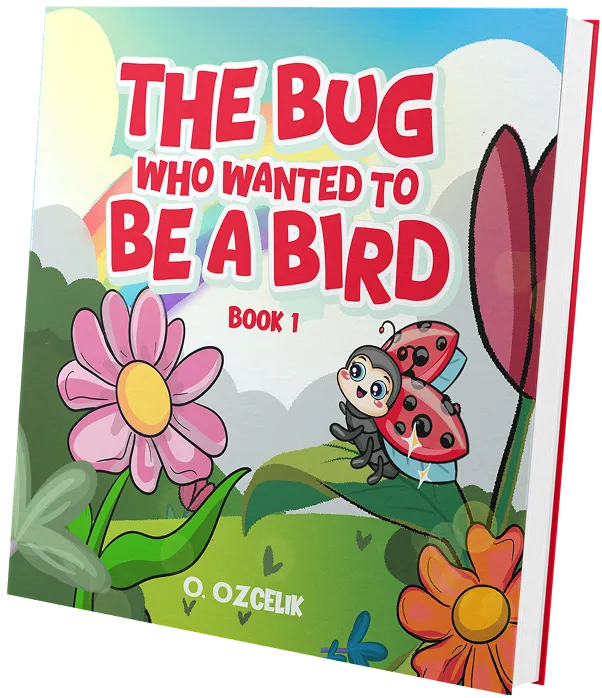
What makes Dotty’s journey so powerful is that it doesn’t start with confidence; it starts with confusion. She leaves her familiar meadow after facing teasing and misunderstanding, setting off on an adventure filled with humor, mishaps and unexpected discoveries. Along the way, she dodges spider webs like a tiny ninja, meets unusual creatures and learns that the world is much bigger and stranger than she ever imagined.
But the real turning point comes when she meets Draco, a dazzling dragonfly who moves through the air with effortless confidence. Draco doesn’t question Dotty’s identity or try to change her. Instead, he offers something far more meaningful: acceptance. He invites her to fly with him, not as something else, but as herself.
That moment changes everything.
Through their friendship, Dotty begins to realize something extraordinary: she doesn’t need to become a bird to experience freedom. She already has her own way of flying. Her wings, small, spotted and unmistakably hers, are enough. Her “difference” is not a limitation; it is her unique strength.
This is where the story becomes a gentle but powerful metaphor for young readers. Dotty’s journey mirrors the emotional experiences many children face: feeling misunderstood, questioning identity and searching for a sense of belonging. But instead of offering heavy lessons, the story wraps these themes in laughter, imagination and warmth.
By the end, Dotty redefines herself in the most joyful way possible, not by becoming someone else, but by becoming fully herself: “Dotty the Whatever-I-Feel-Like-Today.” It is a declaration of freedom, individuality and emotional courage.
For parents and educators, this story becomes more than entertainment; it becomes a conversation starter. It opens the door to questions like: What makes you feel different? Can different be a good thing? and What does it mean to be yourself?
Written with humor, heart and a deep understanding of children’s emotional worlds, O. Ozcelik’s storytelling transforms a simple meadow adventure into something lasting and meaningful.
In the end, The Bug Who Wanted to Be a Bird reminds readers of all ages that being “different” is not something to hide. It is something to fly with.